

VALAR Systems
Glasscalibur
Glasscalibur
Regular price
$179.00
Regular price
Sale price
$179.00
Shipping calculated at checkout.
Quantity
Couldn't load pickup availability
Glasscalibur: automatic window opener
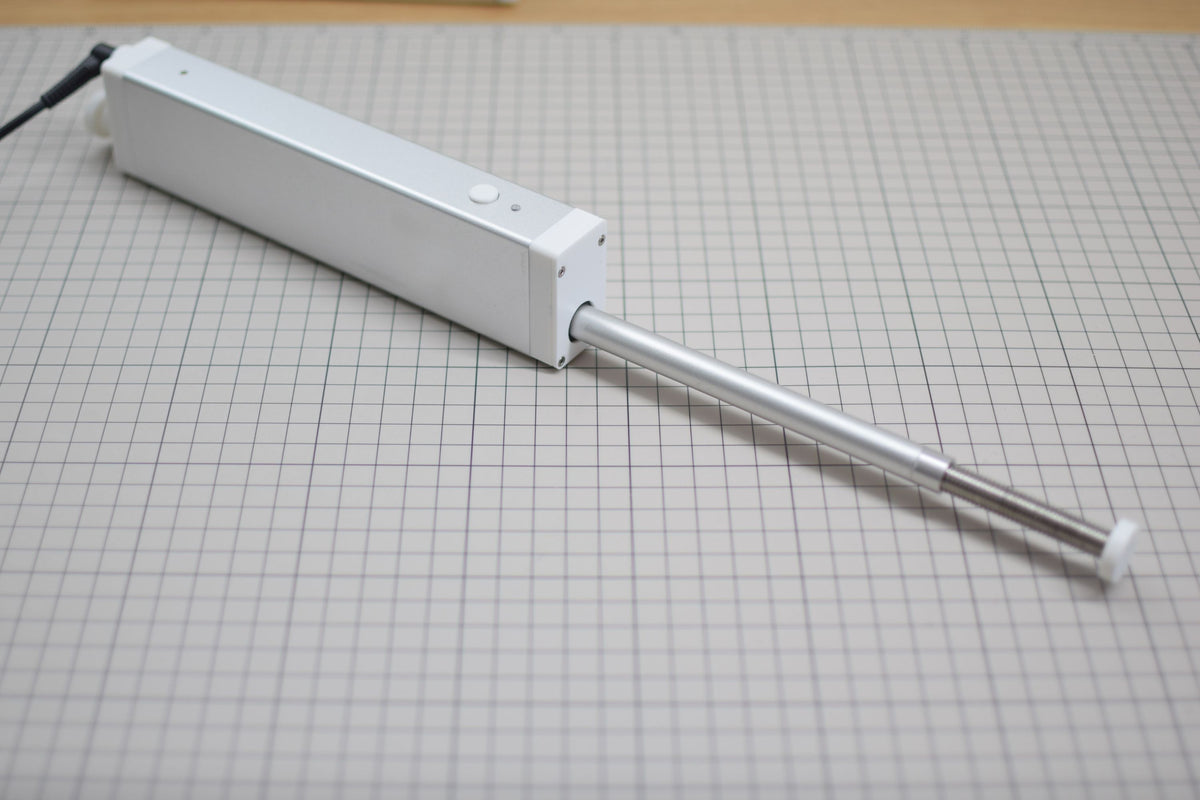
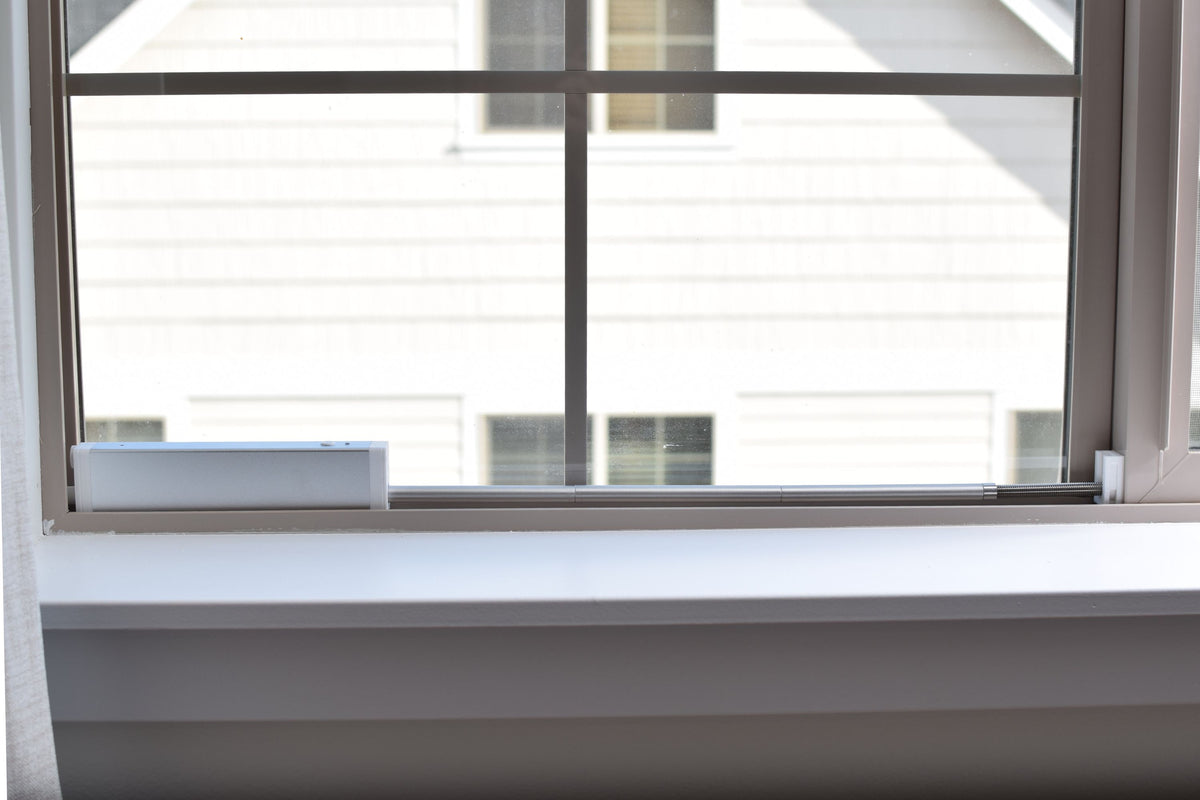
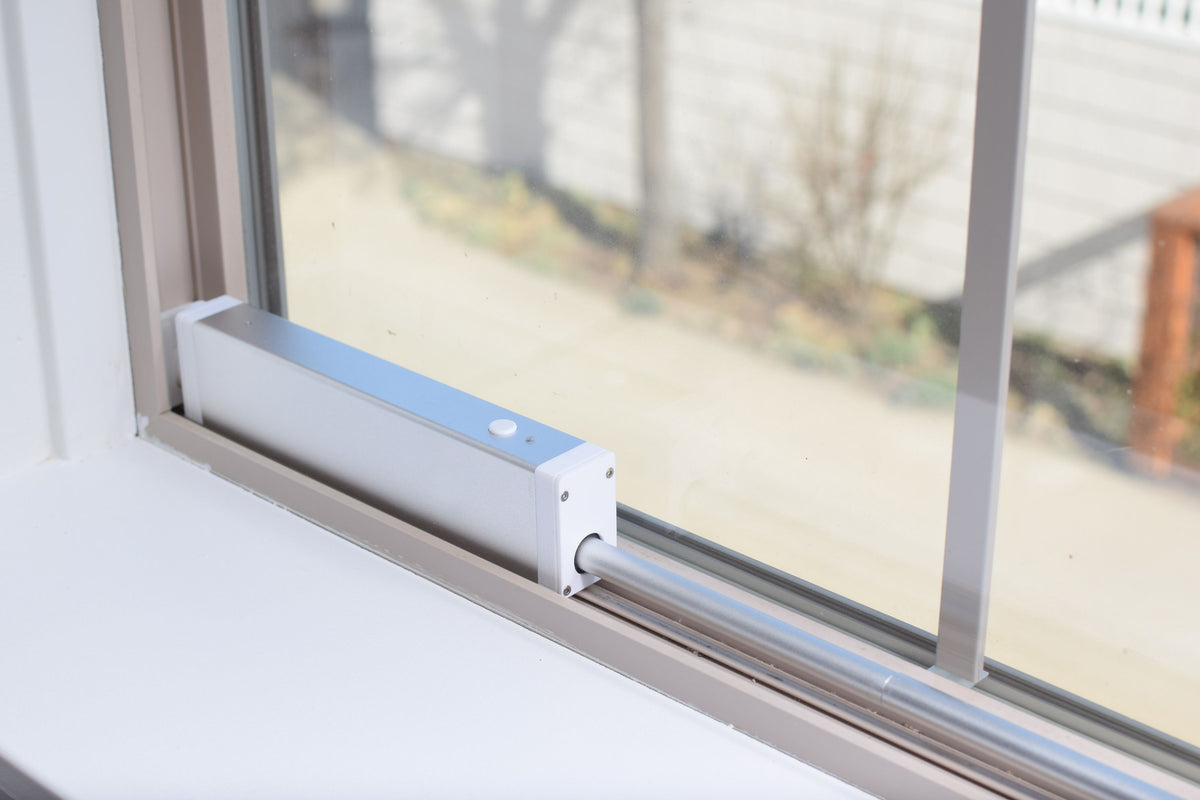
Glasscalibur opens and closes a sliding window for you, whether it's a horizontal slider, a single-hung or a double-hung window. It works on a schedule, from Home Assistant, or from any browser on your home network. There's no app to install and no cloud account.
What people use it for
- Air out a room when an indoor air-quality sensor says it's stuffy
- Close up when outdoor air quality drops, or when rain is on the way
- Let in cool evening air, then close before the day heats up
- Open at sunrise to hear the birds
Sensor-based automations run in Home Assistant.
Ways to control it
- Browser: a built-in page on your network to open, close, set a position, schedule and adjust it.
- Home Assistant: it appears automatically through the ESPHome integration as a window cover, with all its settings. Home Assistant is optional.
- Schedules: fixed open and close times, or sunrise and sunset with an offset.
- On the unit: one click closes, a double click opens.
- HTTP API: for anything else that can send a web request.
Fit and specs
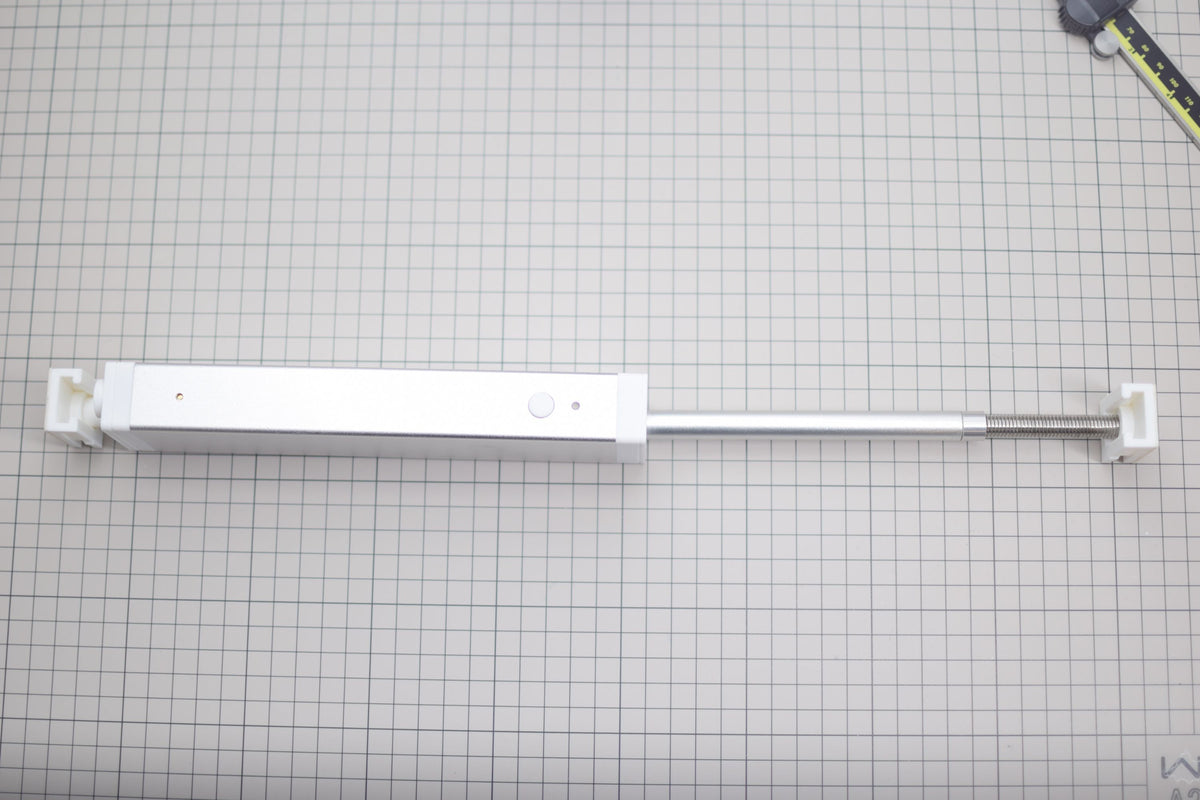
- Works with horizontal sliding windows, and with single-hung and double-hung windows. On a hung window, one unit mounts at the center of the sash.
- Fits 20.5–36.9 in (519–939 mm) between the mounting surfaces on the window frame and the sash, measured along the direction the window slides, with the window closed. The extension tubes and two end-rod lengths in the kit cover that whole range.
- Opens the window up to about 3.9 in (99 mm).
- Three speeds, from a quiet Slow to Fast.
- Needs a 2.4 GHz Wi-Fi network and a power outlet within reach of the 24 V adapter.
- Runs open-source ESPHome firmware on an ESP32-C6. Updates install from a button on its web page.
It looks after itself
- If the window jams or is locked, the motor stops and backs off.
- If the motor runs hot, it holds off on new moves until it cools.
- A one-time calibration teaches it your window's travel and tunes it to how your window slides.
In the box
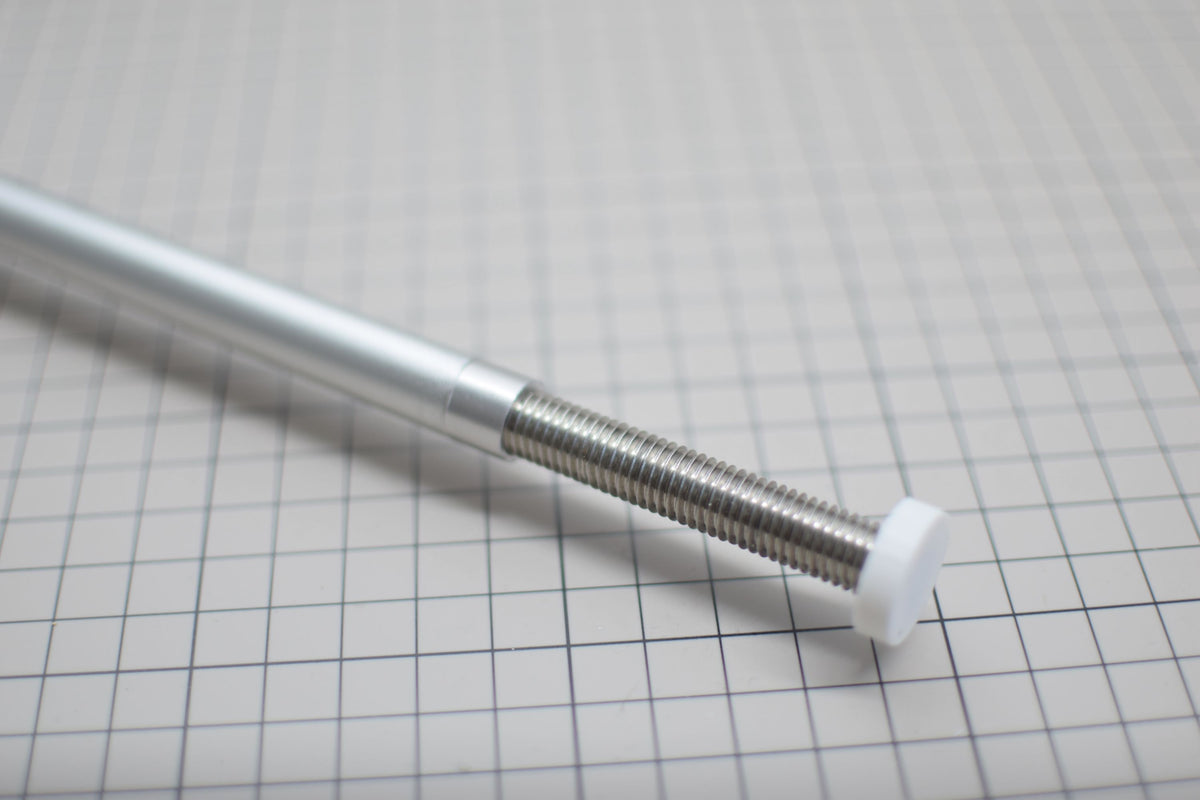
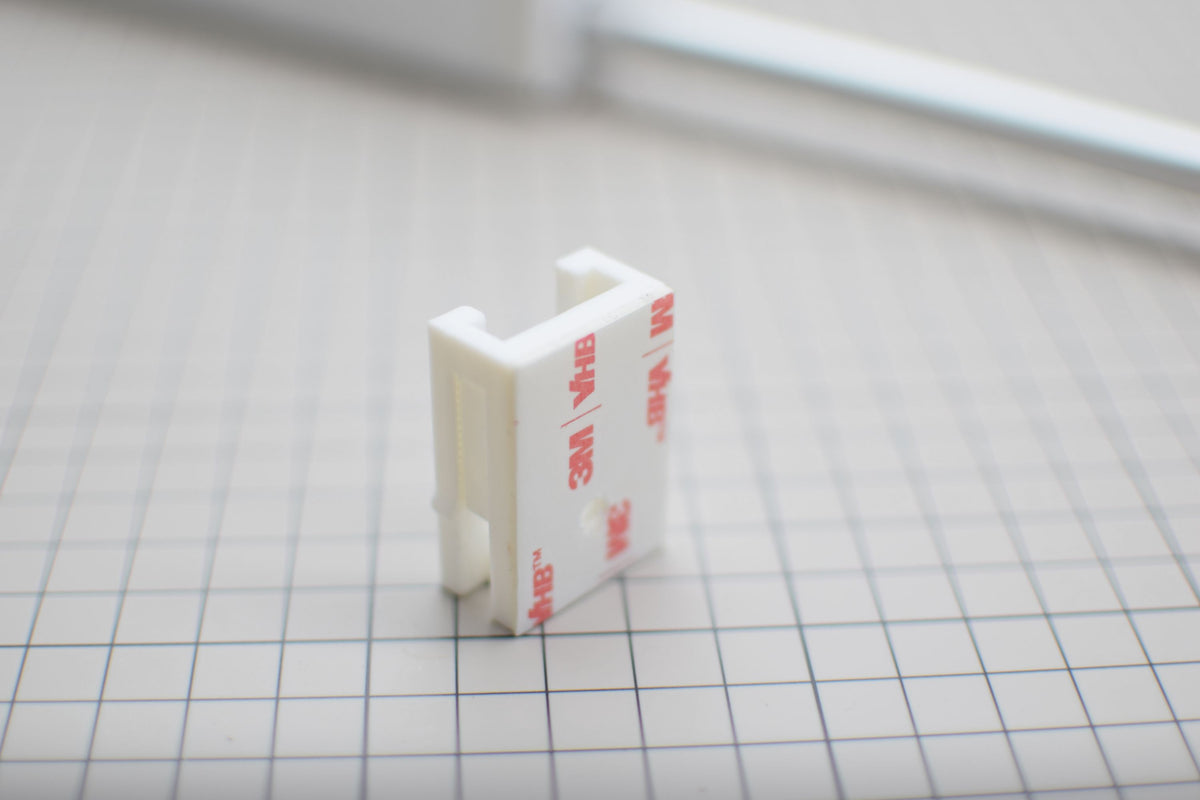
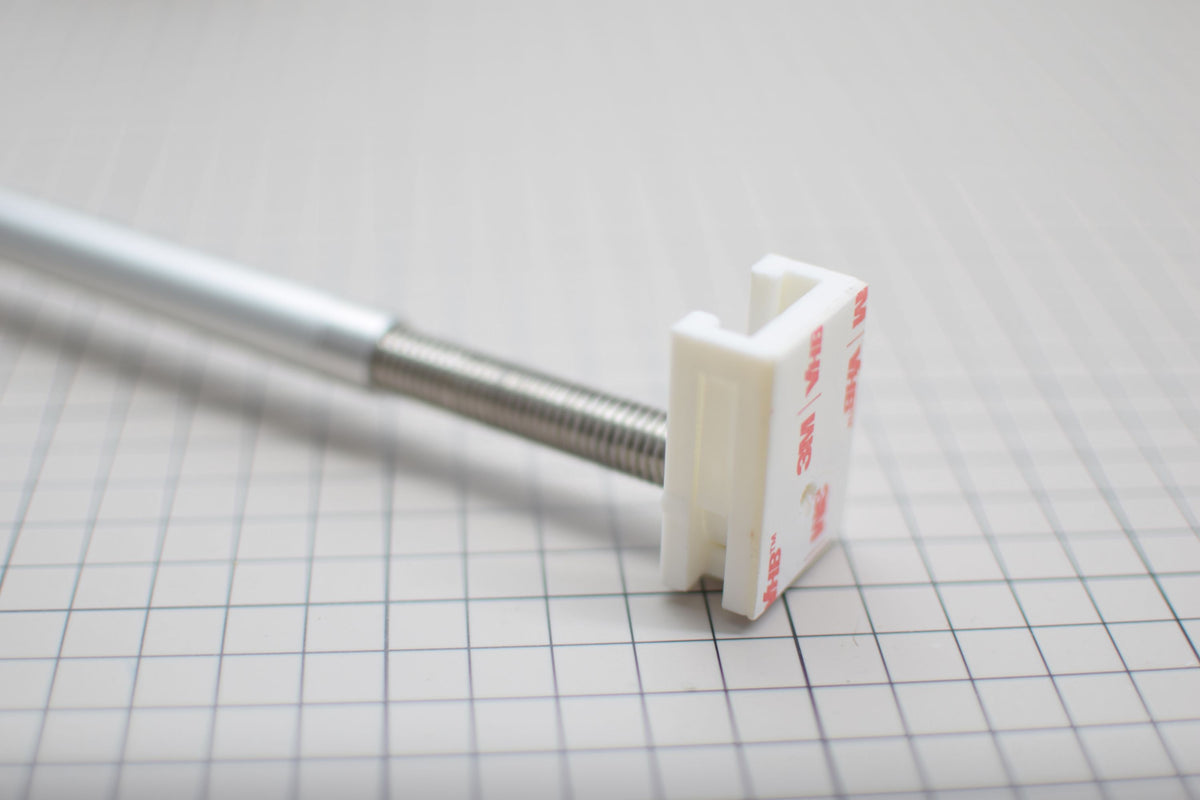
The Glasscalibur unit, two mounts with VHB tape pads and optional screws, three extension tubes, connector rods, two end rods (150 and 180 mm) with nuts, and a 24 V power adapter.
Installing it
- Measure your window and put together the tubes and end rod for its size (the install guide shows which).
- Stick the two mounts in place with the VHB pads; a screw in each is optional. Let the tape cure for 24 hours.
- Set the unit on its mounts and join it to your Wi-Fi from your phone.
- Run Auto-Calibrate once from the web page. The window moves through its range while the unit tunes itself.
To open the window by hand, lift the unit off its mounts. No tools needed.
Good to know
- Glasscalibur is a convenience device, not a safety device. It doesn't detect people and doesn't prevent falls. Keep people, pets and objects clear of the window while it moves.
- It works best on a sash that slides easily by hand. If yours sticks, clean the track and try a dry silicone spray.
- Use only the supplied 24 V adapter.
Open source
The firmware (GPL v3) and hardware design files (CERN-OHL-S-2.0) are on GitHub: github.com/Valar-Systems/Glasscalibur